• Home
  • Sign In My Account
Menu

Daily Do Good

641 S St NW
Washington, DC, 20001
Phone Number
Connecting kindness to communities, one person at a time

Your Custom Text Here

Daily Do Good

  • Home
  • Sign In My Account

BUILD DC

April 10, 2016 Holly Leber
BUILD students. Photo courtesy of BUILD

BUILD students. Photo courtesy of BUILD

Building a Future


Natalee came from a lower-income community in Northeast DC. She was no stranger to hearing gunshots, to seeing teenagers become pregnant or turn to drugs. She was angry. When Natalee’s mother had a stroke, she was in a tough situation, not wanting her younger siblings and cousins to continue in the cycle of the neighborhood, but not knowing how to control her anger to help herself. Eventually, she was expelled from school. 

Photo courtesy of BUILD

At the time of her expulsion, Natalee was a student in BUILD’s first class. She expected to be dismissed from the program as well. But instead, the staff at BUILD showed Natalee faith in spite of her mistakes. 

“Our number one goal is to make sure our students graduate high school on time, and that they enroll in college and persist in college,” said director of development Kamilla Kovacs. “We want them to develop career, personal and academic skills.”

The BUILD coaches and mentors worked with Natalee, helping her find a new school, helping her learn how to channel her fury into leadership. She learned teamwork skills, paid closer attention to her academics, and eventually, she not only graduated high school, but graduated a year early, as class valedictorian. Today, Natalee is a student at Drew University.

She is one of BUILD’s success stories. 

“These are the type of students many would say wouldn’t end up in college,” Kamilla said. “Our students come from undersourced communities. They are already at a disadvantage compared to their peers.”

Most of the students, she said, would be the first in their families to go to college. They tend to have lower GPA’s, lower test scores. 

So BUILD helps them develop the confidence and ability to achieve through entrepreneurship. The students, under supervision from mentors and coaches, develop actual small businesses. 

Natalee, for example, was CEO of her company, We Go Friendly, a customizable, eco-friendly reusable bag business.

One might say that BUILD takes bad students and turns them into good businesspeople. But that’s really just a small part of the program. As the organization’s website says: Entrepreneurship is the hook. College is the goal.

Current companies, said site director Alia Peera, include Lock-It Socks – snaps to hold pairs of socks together in the washing machine – and Elegant Pet Charms – matching charms for pet and owner. 

“This isn’t just a hypothetical,” she said. “They’re doing it all. They’re actually creating these companies.”

Over the course of four years, director of development Kamilla Kovacs said, the students learn both business and academic skills. They are coached for their SAT’s, they visit college campuses, and they receive help with their essays.

At the same time, they learn skills like public speaking, critical thinking and financial literacy. Perhaps most importantly, they learn how to ask for help.

“We are providing not only tutoring but also a wider breadth around professionalism and career skills,” Kamilla said, “that they are going to need to be successful that many of the students don’t get in the communities they come from.” 

In 2013, Natalee gave the keynote address at BUILD’s annual gala. 

“All my life,” she said in her speech, “I had been surrounded by people who had great potential to be more than they could be. But because they didn’t have the right tools to help them, they ended up going down the wrong path.  I am incredibly grateful that BUILD has given me the right tools to get me where I am today.”


BUILD: How I Help

MARK -- BUILD MENTOR


What he does... Works with students to help them understand what it takes to start a business, map out the process and execute it. 

His day job... Owns a company that builds online communities for colleges.

His BUILD project... ChariToes, charity-themed socks. Currently in Year Two.

"It's enjoyable to work with the same students and see their growth."

How he got involved.... Through one of the entrepreneurship emails he receives.

What he is passionate about... Education, working with teenagers.

"It's really cool seeing these students push through and persevere. Sometimes you're not sure how much they're into it until you see them at certain moments in the process."


BUILD: Stats & Resources


All statistics and resources cited herein were found on the Build.org website


GENERAL EDUCATION STATS


- Half a million students drop out of high school in America every year.
- More than half of high-school dropouts are African-American or Latino students from low-income neighborhoods.
- Eighty percent of dropouts quit school because they are "bored."
- High school dropouts earn more than $1 million less in their lifetimes than college graduates.


BUILD STATS


- BUILD serves nearly 1,200 students.
- Ninety-nine percent of BUILD seniors have graduated high school.
- Ninety-five percent of BUILD seniors have been accepted to college.
- Eighty percent of BUILD students are first-generation college students.


RESOURCES

Key Partners

Donate to BUILD DC
In Youth/Education
Comment

Parent Leadership Training Institute

April 10, 2016 Holly Leber
Angela Drake shakes the hand of Mayor Bill Euille. Mayor Euille helped Angela convince the King Street Walgreen's to donate 7000 thermometers to every public elementary school in Alexandria. Photo courtesy of PLTI

Angela Drake shakes the hand of Mayor Bill Euille. Mayor Euille helped Angela convince the King Street Walgreen's to donate 7000 thermometers to every public elementary school in Alexandria. Photo courtesy of PLTI

Becoming a Change Agent


“A parent is the strongest advocate for their children,” said Adrienne Fikes, executive director of the Parent Leadership Training Institute of Alexandria. “Parents know what the child is going through. Parents see things that (nobody else) sees. Children need to be see the parent advocating for them. It’s a wonderful way to raise a child.”

Angela Drake shakes the hand of Mayor Bill Euille. Mayor Euille helped Angela convince the King Street Walgreen's to donate 7000 thermometers to every public elementary school in Alexandria. Photo courtesy of PLTI

PLTI was born in Connecticut in 1992, and came to Alexandria in 2004. Since then, PLTI has taught parents and caregivers how to navigate the system and become engaged in their communities as “change agents.”

A change agent, Adrienne said, is someone who, when presented with a problem in the community, and an opportunity to improve a situation will step up and say, “this is a problem and I’m willing to do something.”

Participants in PLTI go through a 20-week training, taking seminars such as “The Power of the Media” and “Social and Economic Trends Affecting Children and Families.”

Each student performs a community project. Children attend dinners and are exposed to what their parents are learning.

“It’s about active civic engagement for the parents and the children,” Adrienne said. “Some children have begun becoming advocates on their own. We’ve had six-year-olds address the city council.”

PLTI, she said, gives graduates the confidence and the voice to understand public policy and to engage the decision makers, and in some cases to become the decision makers.

Two graduates have run for school board positions, one successfully. Numerous graduates now sit on city boards and commissions. City staff agencies call PLTI to help fill their staffing needs.

“(PLTI),” said Adrienne, “is an opportunity to show parents they know more than they think they do. We’re building a community of people who want to advocate for children.”


Testimonials


LaVon Curtis, PLTI graduate, founder of Bryce Project, a mentorship nonprofit for girls. 


What I learned from PLTI definitely was an eye opener as far as the different aspects of the community, all the different functions of how a government works, how the school system works. As a citizen of the city, who grew up in this city, I felt like it was important to give back to the city from which I came.

PLTI opened doors. It gave me my stepping stone. It gave me the courage, the confidence I needed to proceed with something I had considered. It was such a scary thing, but once I joined PLTI I had a better understanding of not only the nonprofit aspect, but how to use certain words, and how to network with people.

The BRYCE Project was something I thought I needed when I was growing up, and something I wanted to provided to other young girls. It started out as a project, it was not a non-profit. It grew into its own little world. People started clinging on. PLTI definitely changed my life. They gave me the opportunity to open up the doors for myself.

Mario Ashby, PLTI graduate, founder of Men Making Men, a community project to encourage more men to become involved in public schools.


[After Parent Leadership Training Institute], I felt better informed. I felt empowered. I felt like there were answers I could get for questions I have.

What you find out is that when people have problems, the main thing that holds people back is ignorance. They don’t know they have certain rights. When we talked about being different, it opened up our eyes to different perceptions, and it showed me that my view wasn’t the only one.

When I would go into my kid’s schools, I noticed how good my son felt when I was with him. I thought nothing of it. Then this little voice behind me said “can you be my dad, too?” It was funny, but it was sad. That’s what inspired me to encourage fathers, grandfathers, uncles, cousins, to come out and participate with them at events. I believe (father figures) should be a part of a child’s school life.

E. Maribel Enriquez, PLTI graduate, now a facilitator

I was very frustrated because my children were not getting services they need at their school. PLTI offered me to (teach me about) the school and the city system. The most important thing I learned was that I was not "just a parent".

I started to find out about school board elections or any elections in my community. I started to vote, and bring information to my whole family, and make (voting) a family matter. I gained the confidence to use my voice, to speak up about my concerns, ideas and dreams.

I was able to understand and celebrate that I was living in Alexandria and that make me part of the community with rights and responsibilities. Because I was an immigrant, that did not made me less (of a) citizen. I am an agent of change for my whole Alexandra community. PLTI gave me the tools to be able to participate in the community at any level.

As a PLTI facilitator, I want the parents to develop the civic skills they need to be positive agents of change in their communities.

Donate to PLTI
In Youth/Education
Comment

Calvary Women's Services

April 7, 2016 Holly Leber

CREATING POSSIBILITIES


Kris Thompson remembers the woman who told her, “I could go days at a time with no one speaking to me and no one making eye contact with me.”

Like many of the nearly 8000 homeless adults in the greater DC area, the woman was alone.  Kris, who is the executive director at Calvary Women's Services, and her colleagues are working to make sure fewer such women are struggling on their own.

“Part of empowerment comes from relationships,” she said. “Even as we struggle to find ourselves and work on the things that any of us want to work on in out own lives, knowing you have someone standing beside you, that empowerment comes when someone's got your back, when someone is standing by your side.”

First established in 1983 as an emergency shelter in a church basement, Calvary serves about 100 women each year, either in their 45-bed transitional facility (the average stay is six months), or in permanent supportive housing – one of eight subsidized apartments.

Recently, Calvary launched two new programs: Step Up DC to help homeless women develop employment and job search skills, and a program teaching the residents about nutrition and budgeting.

Calvary offers group and individual therapy, with special programs for women struggling with mental or physical illness, or substance addiction, in addition to their LEAP program for Life skills, Education and Arts. LEAP classes are volunteer-lead.

There are courses in job readiness, computer skills, yoga and stress management. There’s a knitting group, a book club, art classes. A volunteer who was part of the DC Quilting Society took some of the women on a field trip to a quilting show, and is teaching them to make beginning patterns.

“Arts for all helps us get outside ourselves,” Kris said. "In the way that you or I could choose to take a class," (we ask) "How do you stretch yourself?" 

“It’s a very accessible place to become involved,” she continued. “It is possible to have your family, including your children, make meals here. It’ possible to lead a class in LEAP. A woman leads a hula hoop class. It's possible to see the impact of your volunteerism.”


How I Help: Peter


Peter Sacco, 21; Senior at George Washington University;
Major: Human Services and Business Administration

Q: How did you come to volunteer for Calvary Women's Services?
A: During my freshman year, I did a lot of volunteer work with homeless services organizations that worked on helping the homeless find jobs and secure public benefits. Starting off my sophomore year, I really wanted to try working in a more residential setting. I Googled “volunteer at homeless shelter DC,” and Calvary was the first link that came up. I’ve been volunteering at Calvary for two years now

Q: What tasks do you perform as a volunteer?
A: Every Friday, I arrive at 9 p.m. and talk with the women and watch TV with them (Monk is a favorite show for all of us). Once they go to bed, I set up breakfast in the kitchen. In the morning I’m up at 5 a.m. to cook breakfast. I’m known as the “pancake man” at Calvary because I always cook pancakes in the mornings. Original and blueberry are the normal menu items, however I’m starting to try out some new recipes. The apple cider ones I tried last week were well received.

Q: What have you learned from your time at Calvary? 
A: The value of hard work and determination. Although many of the women at Calvary have come from less than perfect backgrounds, they are all so determined to work hard and turn their lives around. Every time I’m there different residents come up to me and proudly say they’ve accepted a job offer, enrolled in school, or signed a lease on their own apartment. The success they’ve had because of their hard work and determination always brings a smile to my face.


How I Was Helped: Women of Calvary


In the interest of protecting the privacy and comfort of the women at Calvary, a client interview was not conducted. Instead, we have selected passages from Calvary’s blog, which will give our readers a sense of the women residing there.

Paula came to Calvary after years of drug abuse. She received her CDL learner’s permit in 2013 to become a bus driver. Paula is currently living on her own, working to maintain her sobriety, and volunteering with young people in her community. Paula said:

“My case manager showed how to make my goals doable – step by step. To have someone who really cares about you is a boost. It made all the difference in the world. I felt I was a part of something.”

After years of drugs, trauma and abuse, Jill found her way to Calvary. A resident of Sister Circle, Calvary’s permanent housing program, Jill takes advantage of the educational opportunities available to her. As of 2013, Jill was working toward her GED. Of the LEAP program, Jill said:

“The program taught me how to be responsible.”

One resident, who wished to remain anonymous, reflected on her experiences at Calvary, and all that she’d learned, in a writing workshop. She wrote:

I enjoy having the freedom to pursue my future. I’ve been meeting people and learning the importance of interacting and making friends for life. This way I’ll be there for others and they’ll be there for me throughout my life.

Anna was part of Calvary’s STRIDE – Search Together to Resume Dignified Employment - program. After completing STRIDE, Anna earned a full-time job at a local hotel, and moved into her own apartment.

When she got her first paycheck, Anna told me how much she wanted to buy a new pair of boots, but she wasn’t going to because saving her money for her own place was even more important to her. —Kris Thompson

Editor's note: All photos from the Calvary Women's Services website, except for the photo of Peter Sacco. Images do not necessarily reflect any of the persons referred to in the story.

In Women, Hunger/Homelessness
Comment

Active Minds

April 7, 2016 Holly Leber
Brian and Alison Malmon, photo courtesy of Alison Malmon

Brian and Alison Malmon, photo courtesy of Alison Malmon

TRAGIC LOSS INSPIRES A MOVEMENT


When Alison Malmon was a freshman in college, she lost her only brother to suicide.

Brian Malmon, 22, had been a successful high school student, a successful college student at Columbia University. But he struggled with depression and psychosis, which he mostly kept to himself. His friends had an inkling something was wrong, Alison said, but they wanted to respect his privacy.

Eventually, Brian took leave from Columbia and went home to heal. "This was literally the first time my family knew he was struggling with anything,” Alison said.

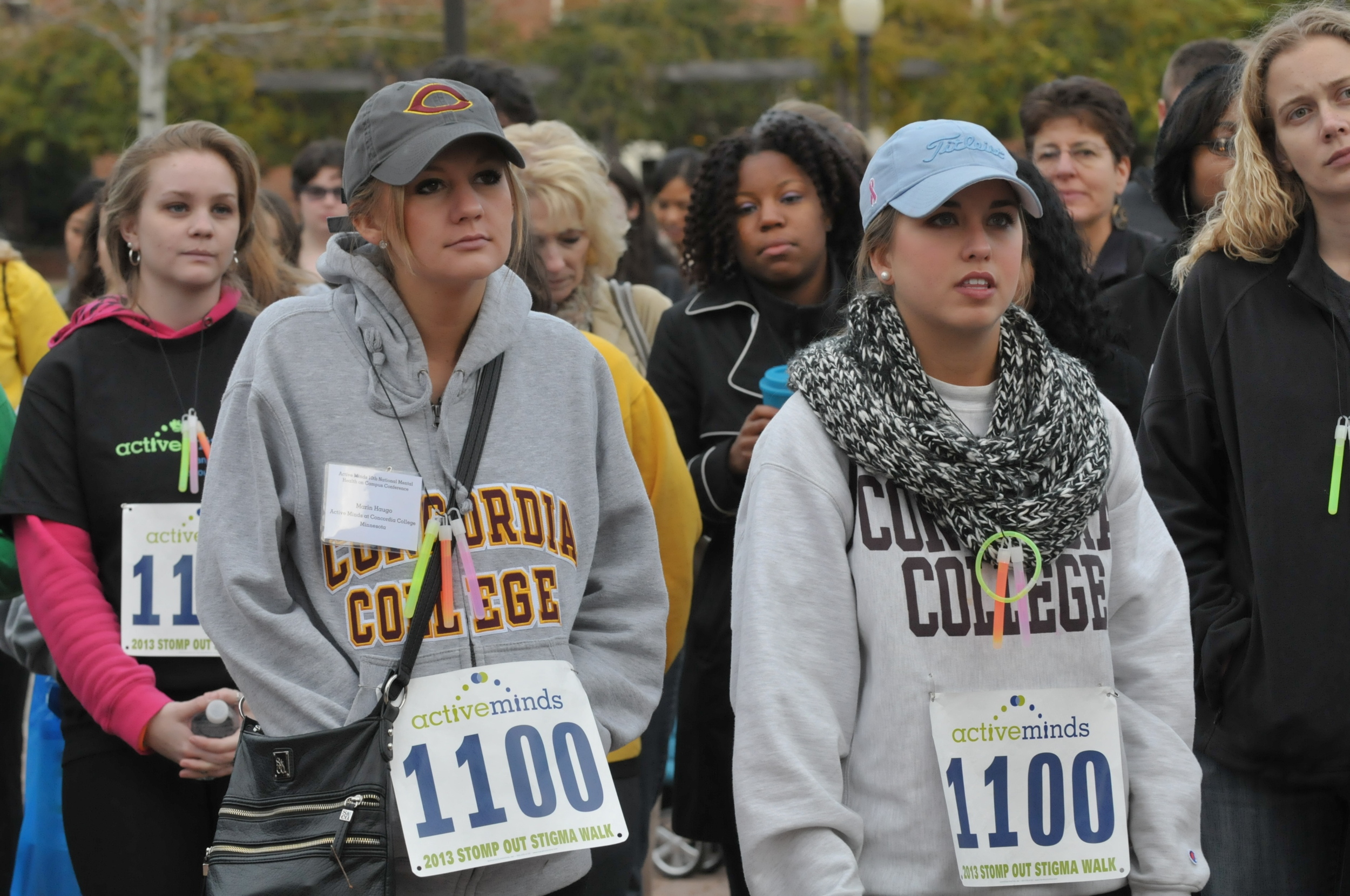
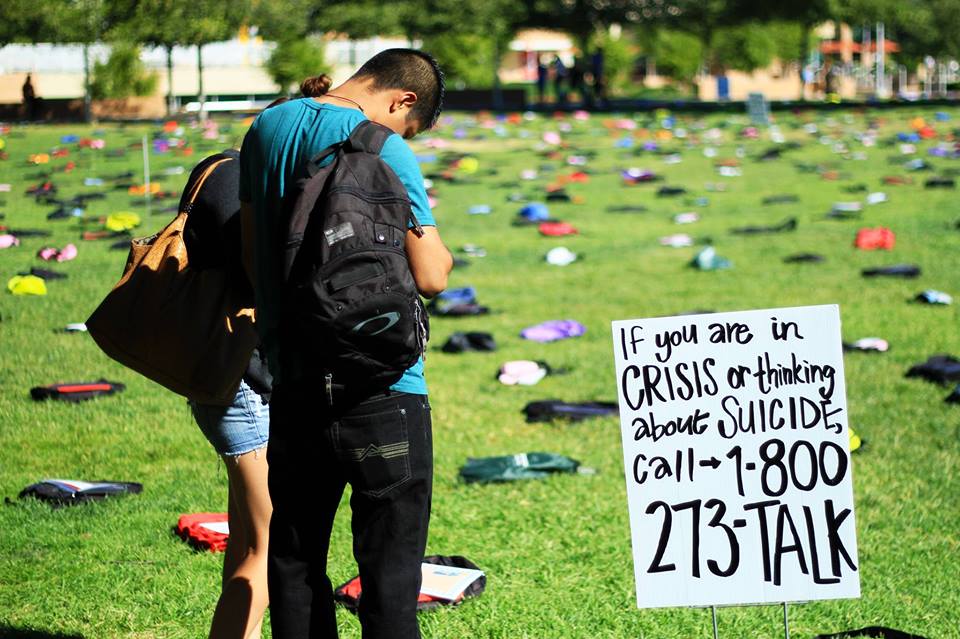
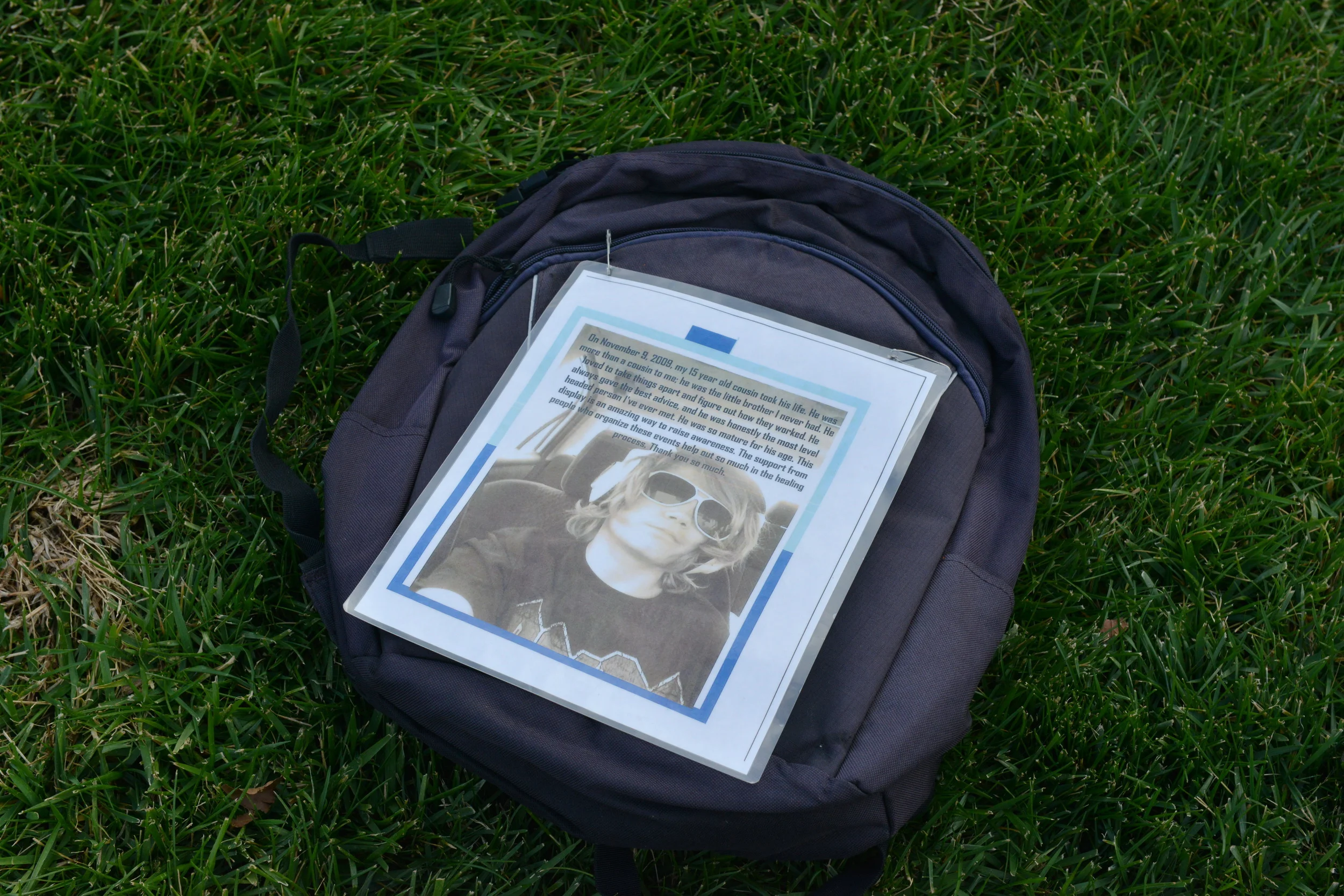
Students look on at a  Send Silence Packing display. Photo courtesy of Active Minds

Students look on at a  Send Silence Packing display. Photo courtesy of Active Minds

The March after he should have graduated, Brian took his own life.

"As a freshman in college, I was trying to figure out who I was and trying to find my identity, and suddenly I became an only child,” Alison said.

Struck by the knowledge that her brother had struggled alone for years, and that other students were likely suffering, Alison looked for a way to help.

“I was devastated, and I was scared to death,” she said. “My brother and I were really similar, and I realized it could be me, or it could have been me."

She realized a major step was to break the stigma around metal health issues, the idea that depression is weakness, or something to simply “snap out” of.

Suicide survivors -- people who lost someone to suicide, often feel anger toward the people who commit suicide. But Alison wasn’t angry at her brother. Instead, "I felt anger toward our society that forced him to feel (like he had to struggle in silence)."

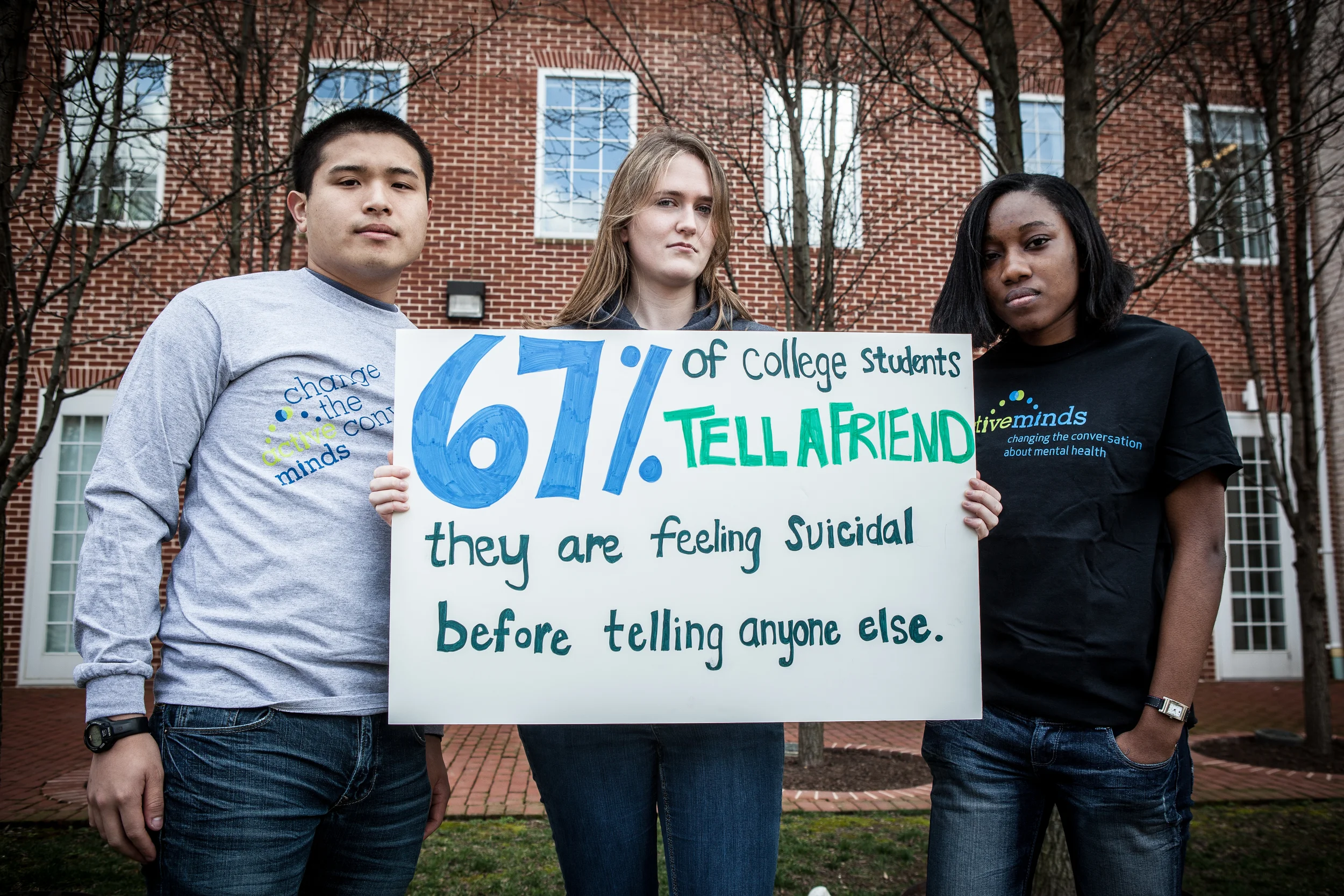
She created a support group, then called Open Minds, on the University of Pennsylvania campus, where students would have a safe place to talk about their struggles and would be able to ask for help. Alison wanted to create a space for people like her brother, a space they could be safe. Thousands, perhaps millions, of young adults across the country struggle with depression, anxiety, and other mental health issues.

“This is much bigger than Brian’s story,” Alison said. "The first part of changing the conversation about mental health is starting a conversation about mental health." 

After graduating in 2003, Alison formed her organization, renamed Active Minds, and established it as a non-profit. She gave herself two years to make it work. Ten years later, Active Minds is a nationally recognized entity in the field of young adult mental health awareness, with more than 400 chapters on college campuses across the United States.

On October 6, Active Minds celebrates National Day Without Stigma as part of Mental Illness Awareness Week.

"I hear from students on a weekly or monthly basis that Active Minds has saved their life, or a program that we did has gotten them help,” Alison said.  “Nothing will ever bring my brother back, (but) knowing that one other family doesn't have to go through what my family has gone through keeps me going."


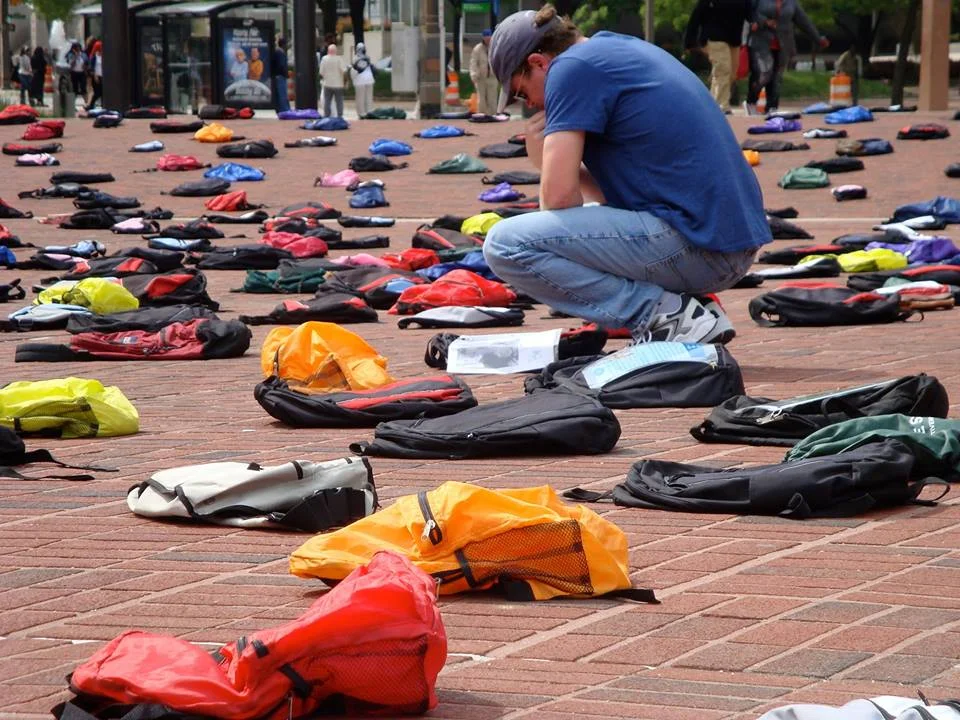
A Send Silence Packing display. Photo courtesy of Active Minds

A Send Silence Packing display. Photo courtesy of Active Minds


How I Help: Alise


Alise Sams, 19, Junior at George Mason University, studying psychology
President of campus Active Minds chapter

Q: How did you come to volunteer with Active Minds?
A: When I came to college, it was my first time being away from home. My anxiety was bad and one of my advisors suggested I go to an Active Minds meeting. I’ve seen stigma in my own life, and after seeing how mental illness affects college students, I thought it was really important. I started going to events and volunteering.  I started to learn more about specific campaigns Active Minds runs, and it got me more interested.

Q: What sort of work do you do in your capacity as president of the GMU chapter of Active Minds?

A: As the president, I work with the chapter’s executive board. We try to educate the campus and get them to interact with us so we can raise awareness. Our biggest goal is to try to engage the community. We have weekly meetings, and we brought Send Silence Packing to campus. We also work closely with Counseling and Psychological Services, and MasonCares, so we’re kind of student liaisons.

Q: What have you learned, or what has touched you about your experience working with Active Minds?
A: For me, personally, the most moving thing that happens is when a student sees us doing a campaign and they share a personal story that we’ve had an impact on them, or they’ve seen the impact our group has had on campus. Every time we can help someone or make someone feel better about what’s happening in their life it makes me feel really grateful to that person that they felt comfortable sharing that with us. It’s great to see people that are willing to talk, willing to engage with us, because that’s what we want to accomplish by getting rid of stigma. It’s kind of like a little victory.


How I Was Helped: Emily


Emily Lerman, 32, Elementary School Teacher


Q: Why were you in need of Active Minds’ services?
A: At 26, I was in the midst of a severe depressive episode. I was so sick that I had to quit my job and move back home with my parents. I had struggled with depression and anxiety since I was a teenager, but I was always able to somehow function and get through the day. It wasn't until I was 26 that the stressors of life became too overwhelming, and I completely shut down. I couldn't think straight, couldn't eat, couldn't get out of bed. I was terrified and confused, and had little understanding of what was happening to me.

Q: Did anything specific cause your depressive episode?
A: I broke up with my boyfriend of five-and-half years and started a new job, but I want to be clear that I did not become depressed because of the break-up or new job. This is often a misunderstanding with mental illness. I was already depressed, and then two huge life events pushed me over the stress-level edge. It’s like trying to train for a marathon with a broken leg. It’s just impossible. You are too impaired.

Q: How did you connect with Active Minds?
A: When I was living at home, a colleague of my father's suggested to him that I get in touch with Active Minds. I was surprised to see the founder was a high school and college acquaintance, Alison Malmon. I was inspired by her work and felt that this was something—probably the only thing-- I could contribute to while in the midst of this depression. I reached out to her and offered to volunteer.

Emily, third from left, with her siblings. Photo courtesy of Emily Lerman

Emily, third from left, with her siblings. Photo courtesy of Emily Lerman

Q: How has Active Minds helped you?
A: When I connected with Active Minds, I connected with people who understood what I was going through -- and that understanding, compassion, and acceptance was the first step to healing. Had I not connected with Active Minds, I'm not sure how my story would have ended. Active Minds gave me a place to go when I felt as though I belonged nowhere. They gave me a reason to believe in myself and believe that I could, and would, get better, and that I had value in this world.

Because many of them had been there themselves, they absolutely understood what I was going through, and they knew I'd come out of it. And when you're depressed, believe me-- that kind of understanding is everything.

Q: What intangibles have you taken away from your work with Active Minds?
A: Increased self-confidence, knowledge and understanding of mental health issues, acceptance of myself and my illness, a desire to help others, a belief that I can make a difference, and the knowledge that sharing my story can be a life-saver for those who suffer.

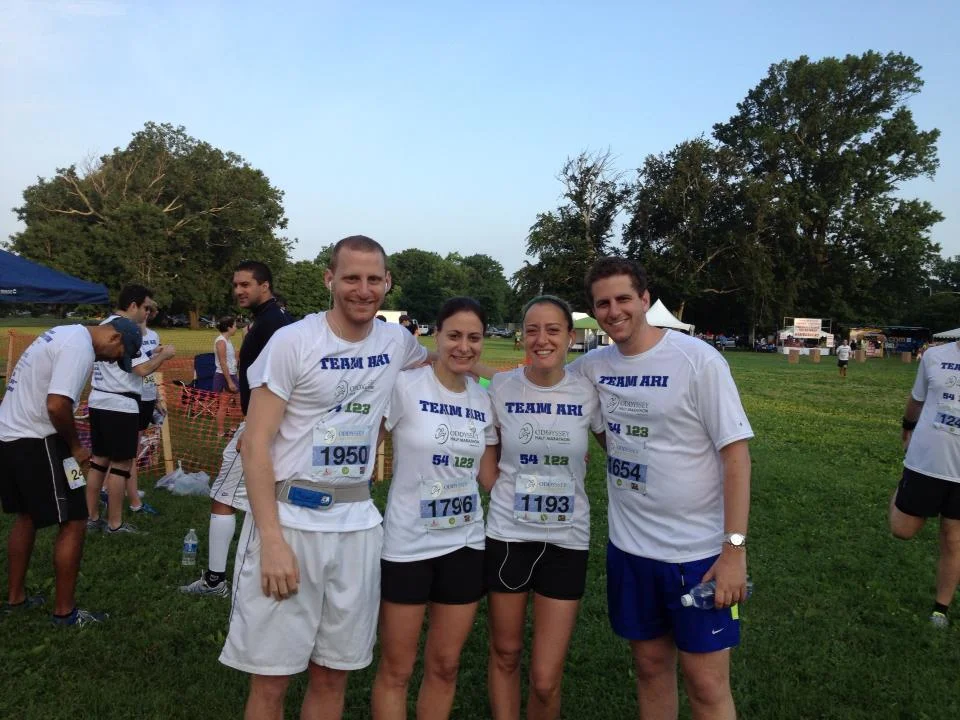
A marathoner, Emily has raised more than $120,000 for Active Minds through running sponsorships and fundraising, including spearheading two half marathons to honor a friend, Ari Johnson, who died by suicide in 2013. Emily’s friends and family have also supported Active Minds. Her three siblings have all run to support the organization, and her father now serves as Chairman of the Board. 

In Health/Mental Health
Comment
← Newer Posts

HOME     SUBSCRIBE     BLOG     ARCHIVES     Testimonials     CONTACT


support DDG

Stealing isn't a good look for you.  ©Do Good, LLC. All rights reserved